Click image, I think it will get Very Big.
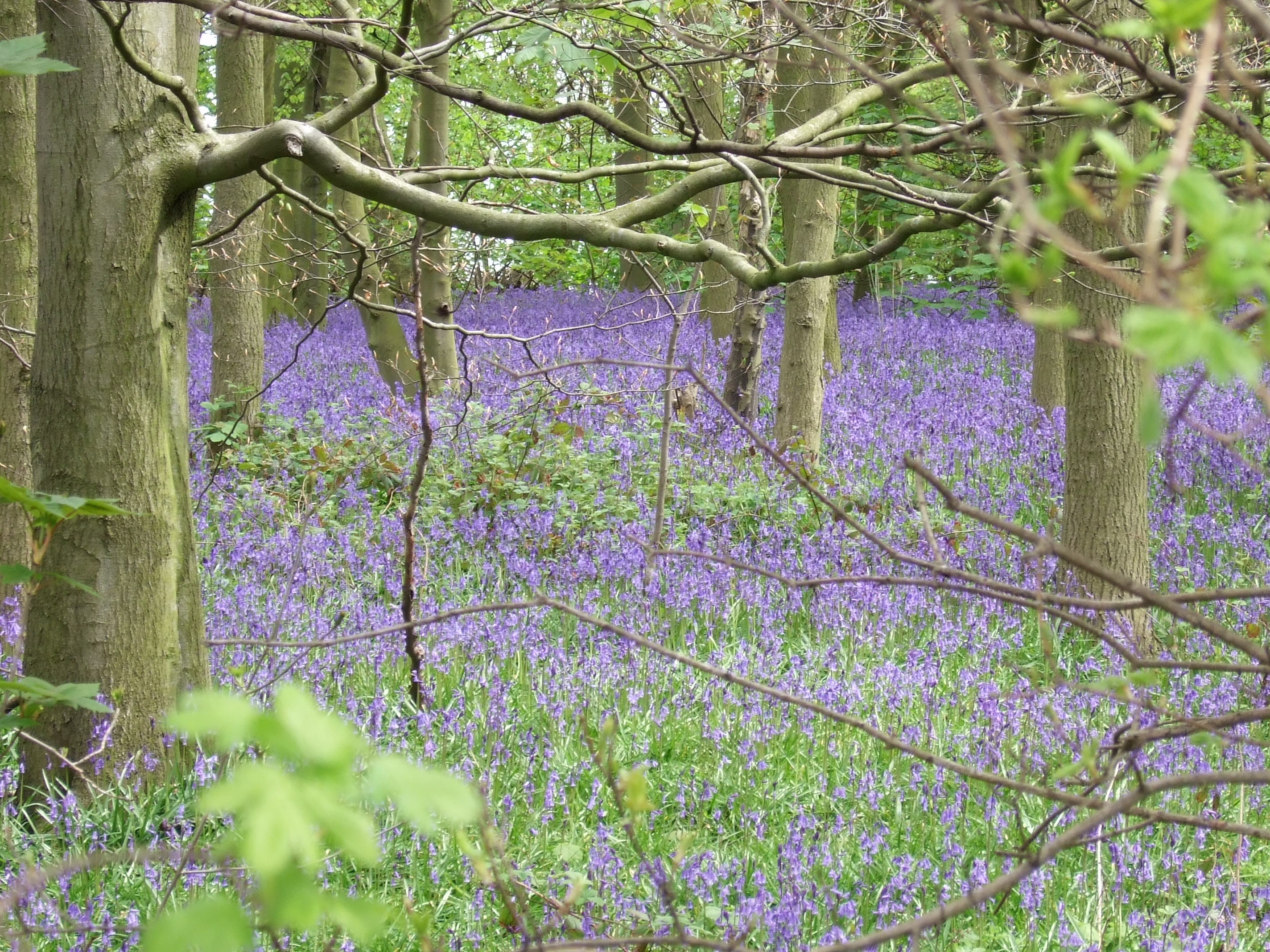
Bluebells
in Colonel's Covert, East Leake,
South Nottinghamshire, England.
End of May, beginning of April.
52.81459N 1.18986W
IF there are any funny things in the punctuation of this poem, that may lead you to believe they are errors or typos, they are something else. More than any poet whom I enjoy, Gerard Manley Hopkins attended to -- obsessed upon -- every dot of ink in each poem he wrote down on paper. So when I went looking for this Hopkins poem just now -- a Hopkins poem new to me until today -- and filched it (I think he's been dead long enough not to hear any complaints from his estate, and he possibly has no estate because he was a Jesuit priest, and such have sworn an oath to poverty, among other intentionally unnatural desires), I have reproduced it hither WYSIWYG, hoping only that the site from where I filched it reproduced Hopkins' original intentions.
S.W.M.B.O. does not share my appreciation for Hopkins. One reason Hopkins obsessed so on punctuations and diacriticals was that he was trying to re-inject into modern English poetry as much as he could reflect of our lingo's root lingo, circa 650 A.D. Anglo-Saxon a.k.a. Old English poetry, a task Hopkins called "sprung rhythm."
Anglo-Saxon literature is S.W.M.B.O.'s métier -- she is your Go-To Human for all your Beowulf needs* -- and regards Hopkins' sprung rhythm experiment as having all the authenticity of EuroDisney's animatronic talking Madame de Pompadour. (But I am sure many men and perhaps a few women have fallen under Mme Electric Pompadour's spell, too, and visit her often.) In general, S.W.M.B.O. has very little appreciation or regard for anything claiming to be English literature more recent than Ælfrǣd the Great (died 899). 20th century literature she regards largely with confused unpleasantness, like accidentally drinking Moxie soda pop, and what litherachoor the young 21st century has produced so far strikes her with blunt horror, outrage, and the frequent urge to phone the police. Mostly she wonders why sane humans would even write this stuff in the first place, and immediately realizes her question contains its own answer.
This beautiful early summer Sunday morning began gently with a kiss from the satellite TV, from the BBCA = BBC America channel. This fellow Robert Macfarlane
(born Halam, Nottinghamshire 15 August 1976), is a British travel writer and literary critic. Educated at Nottingham High School, Pembroke College, Cambridge and Magdalen College, Oxford, he is currently a Fellow of Emmanuel College, Cambridge, and teaches in the Faculty of English at Cambridge.
had a show called "Unexpected Wilderness," and prowled all over the environs just beyond London to find areas still wild (and that's not easy, but Macfarlane knew where the wild places are), places pretty much as they were before The Angles and Saxons or Picts and Scots canoed from the Continent to the island of Britain.
We tuned in just as Macfarlane was in a Bluebell (Hyacinthoides non-scripta, or Endymion non-scriptum, or Scilla non-scripta, or Agraphis nutans) Forest on the cusp of April/May. At this moment, spring sufficiently warms the soil for the bluebell bulb to revive and bloom, but this woodland explosion of wild blue has only a brief time to shock, scream, astonish and thrill us. Soon the forest canopy will revive, and block sunlight to the forest floor, and all the bluebells will be gone.
Macfarlane is also a Hopkins freakazoid, and as he stood ankle-deep in a lurid blue flood of these gorgeous but temporary wildflowers, he quoted from this poem, and said Hopkins saw the yearly thrill of the bluebell forest as a miracle which always had the power to lift his heart -- which was usually depressed, bleak and unhappy. (Whatever else Hopkins was, no one has ever called him a Happy Camper.)
So here's the whole poem thing.
I think "Unexpected Wilderness" was originally broadcast in UK as "The Wild Places of Essex" in a series called "The Natural World." (Essex is from Ēastseaxe = "the East Saxons." I think the Saxons were originally hired to come to England as mercenary soldiers.) An astonishing documentary of beauty and ideas -- Who knew these amazing places were there?
Macfarlane makes clear that they were here before we got here and made so much noise and destruction, and they will be here to watch us go. (This week they are watching News of the World and a dozen of its top pervs go extinct, or prepare to defend themselves from criminal charges, or are hiding from outraged lynch mobs.)
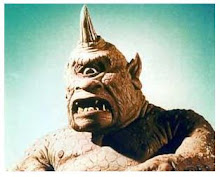
* Except who or what Grendel was. S.W.M.B.O. doesn't know, she says nobody knows. I had a lovely e-mail exchange with an f_minor fellow who actually lives in Friesland (their weekly newspaper is written in Fries), and he says nobody on the island has a clue either. Grendel could have been a really big, nasty, man-eating duck. Or it could have been a One-Eyed One-Horned Flying Purple People-Eater.
* * *
The May Magnificat
by Gerard Manley Hopkins
May is Mary’s month, and I
Muse at that and wonder why :
......Her feasts follow reason,
......Dated due to season—
Candlemas, Lady Day ;
But the Lady Month, May,
......Why fasten that upon her,
......With a feasting in her honour ?
Is it only its being brighter
Than the most are must delight her ?
......Is it opportunist
......And flowers finds soonest ?
Ask of her, the mighty mother :
Her reply puts this other
......Question : What is Spring?—
......Growth in every thing—
Flesh and fleece, fur and feather,
Grass and greenworld all together ;
......Star-eyed strawberry-breasted
......Throstle above her nested
Cluster of bugle blue eggs thin
Forms and warms the life within ;
......And bird and blossom swell
......In sod or sheath or shell.
All things rising, all things sizing
Mary sees, sympathizing
......With that world of good
......Nature’s motherhood.
Their magnifying of each its kind
With delight calls to mind
......How she did in her stored
...... Magnify the Lord.
Well but there was more than this :
Spring’s universal bliss
......Much, had much to say
......To offering Mary May.
When drop-of-blood-and-foam-dapple
Bloom lights the orchard-apple
......And thicket and thorp are merry
......With silver-surfèd cherry
And azuring-over greybell makes
Wood banks and brakes wash wet like lakes
......And magic cuckoocall
......Caps, clears, and clinches all—
This ecstasy all through mothering earth
Tells Mary her mirth till Christ’s birth
......To remember and exultation
......In God who was her salvation.